
Investment Advisors Express Strong Confidence in Eragene ICT’s TARENI Initiative
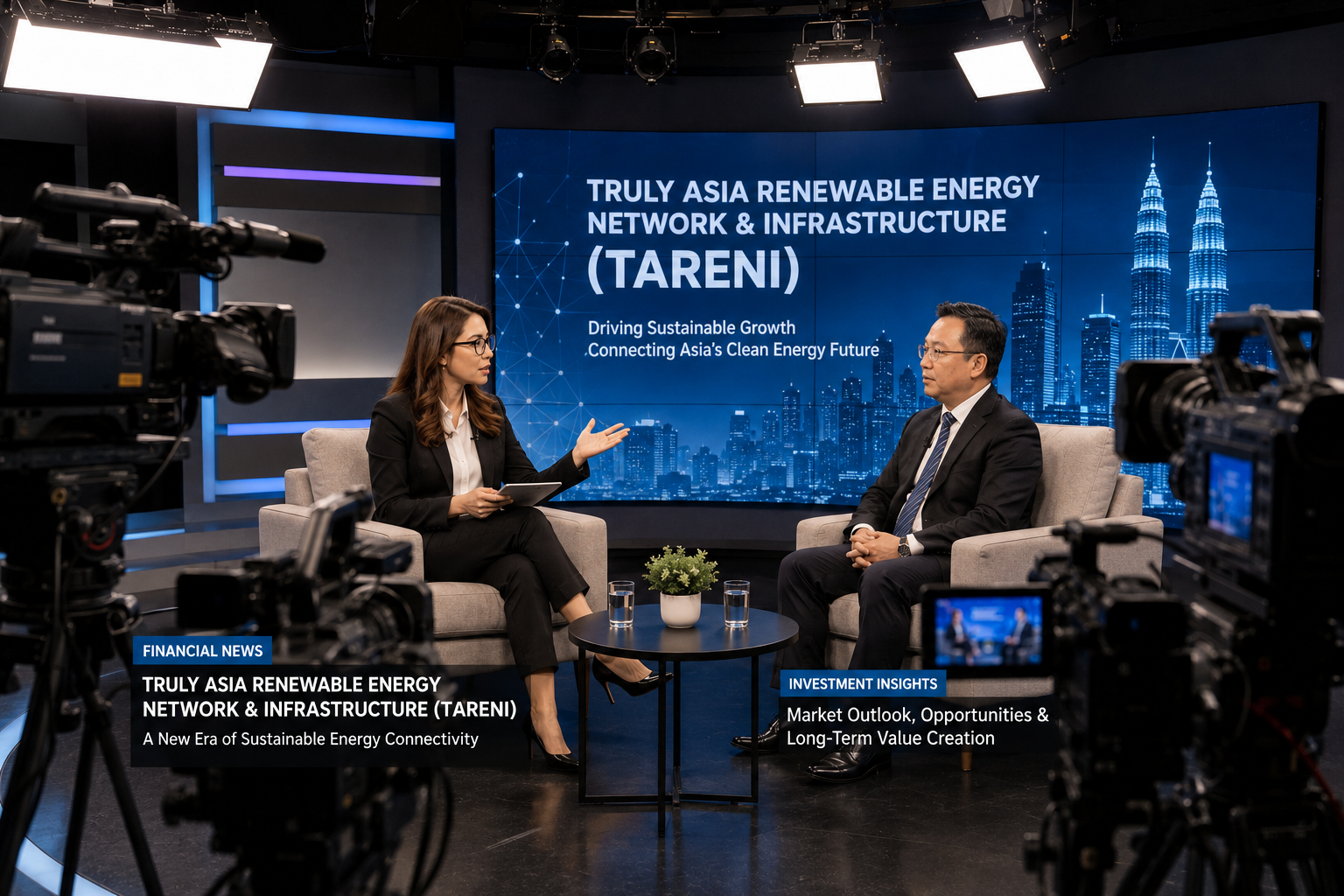
KUALA LUMPUR — International investment advisors and energy market analysts are increasingly viewing the Truly Asia Renewable Energy Network & Infrastructure (TARENI) initiative by Eragene ICT Sdn Bhd as one of the most ambitious renewable infrastructure opportunities emerging in Southeast Asia.During a prime-time international business television interview, leading financial strategists described TARENI not merely as another solar project, but as a potential regional energy transformation platform capable of positioning Malaysia as a future ASEAN renewable energy supergrid leader.The televised discussion focused on the growing strategic importance of cross-border renewable energy infrastructure and Malaysia’s opportunity to become a major exporter and coordinator of clean electricity throughout Southeast Asia.According to the interview panel, TARENI’s integrated approach — combining renewable generation, battery storage systems, subsea HVDC transmission infrastructure, green industrial development, and regional energy connectivity — places the project in a unique category compared with conventional renewable developments.The project’s initial development phase is expected to focus on a renewable energy corridor connecting Pahang to Singapore, supported by solar generation, biomass energy, battery energy storage systems (BESS), and a subsea HVDC interconnector infrastructure.
Investment commentators also emphasized the strategic importance of the proposed HVDC subsea transmission corridor, describing it as a potential foundation for broader ASEAN interconnectivity in the future.“Countries that control renewable generation alone may benefit temporarily,” another advisor remarked. “But countries that control generation, transmission corridors, storage systems, and regional energy exchange platforms will dominate the next generation of energy economics.”Financial observers interviewed during the broadcast further pointed to Malaysia’s competitive advantages, including: Strategic geographic positioning in Southeast Asia Strong solar irradiation and biomass potential Existing engineering and industrial capabilities Access to maritime infrastructure Government support for energy transition initiatives Growing regional demand for green electricityThe TARENI memorandum also outlines longer-term ambitions involving future interconnections potentially extending to Thailand, Cambodia, Laos, Indonesia, and East Malaysia as part of a broader ASEAN renewable energy network.
From an investor perspective, advisors believe the project could trigger multiple layers of economic expansion beyond electricity generation alone, including: Green industrial zones Data centre investment inflows Energy technology localization High-skilled engineering employment Battery ecosystem development Renewable energy financing platforms Port and logistics modernizationIndustry analysts also observed that Malaysia now has an opportunity to compete strategically with regional energy leaders by becoming a major renewable infrastructure gateway.“TARENI could become one of the defining infrastructure stories of Malaysia’s next economic cycle,” said a regional infrastructure consultant featured during the program. “If policy alignment, financing structure, and regional cooperation move in the right direction, Malaysia may eventually emerge as Southeast Asia’s second major renewable supergrid powerhouse.”The interview additionally highlighted that Eragene ICT Sdn Bhd has already engaged multiple technical and strategic stakeholders, including engineering firms, technology providers, and international investors, while preliminary feasibility and design studies are ongoing.
Under the proposed concept, TARENI’s Phase One capacity could initially range between 300 MW to 500 MW, with long-term expansion potential beyond 1 GW, depending on regulatory approvals, technical feasibility, and regional demand growth.
Market observers concluded that while the project remains subject to feasibility studies, regulatory coordination, and commercial structuring, investor sentiment toward the initiative is increasingly optimistic.For many professional investors watching the international broadcast, the message was clear:
Malaysia is no longer being viewed merely as a renewable energy participant — but potentially as a future regional clean energy infrastructure leader.